Joint Opening and Loosening DVD, me - Brian C. Allen, my business - OMHS, qigong, t'ai chi

Joint Opening and Loosening Exercises – Upcoming DVD Release

I am currently working on a video project currently that will result in an instructional DVD for joint opening and loosening exercises as taught in my qìgōng (氣功) and tàijí (t’ai chi -太極) classes. I have finished all of the filming, almost 2 hours of footage, but still need to do much editing. The target price is set at $20. I want it to keep it inexpensive so that it is accessible to more people.

The DVD has its own Facebook page HERE.

It is Qìgōng.

The joint opening and loosening exercise set makes for an excellent daily qìgōng routine. It is relatively simple to perform and only takes between 10 to 15 minutes to complete depending on pace. By opening and loosening the joints, you are also helping to open the acupuncture channels in the body, thereby aiding in the circulation of your qì and blood. There is a saying in China that roughly translates to “a used door hinge never rots.” Regular practice of this set while working on becoming more correct in how you do the set will bring you many worthwhile benefits.

It is also Jīběngōng (基本功).

Jīběngōng translates roughly as basic exercises. This set of joint opening and loosening exercises serves as a set of basic training exercises for developing foundational skills in tàijí. Having open and loose joints is a requirement in tàijí, and in my opinion is an important part of the “sinking” that is also part of tàijí. Doing this set regularly and correctly will help build part of your martial arts foundation.

The DVD consists of 4 parts, not counting opening and closing remarks.

Part 1 of the DVD is a demonstration of the set of exercises for the purpose of following along in order to memorize the sequence or to serve as a reference. I have uploaded part 1 to YouTube as a freebie, and it can be found here:

If you have not yet subscribed to my YouTube channel so that you never miss a new video of mine,  please click here to subscribe.

Part 2 of the DVD consists of a breakdown of how to do the individual movements. There is much more to it than meets the eye. Based on appearances, this is a simple set of range of motion exercises for the major joints of the body. If done conventionally, this set has value in that is keeps you moving and able to maintain range of motion into your old age if practiced carefully and daily. However, I do these movements in a specific manner driven by awareness. Done this way, this set is a vehicle for discovery of what it means for a joint to be open and how to maintain that openness. Having open joints, in my opinion, is not only a basic requirement for internal martial arts and for allowing forces to pass through the body, but it is also an important part of good qìgōng, allowing for better circulation of the and blood. I feel that if physical forces can get stuck in your body at certain points, then the and blood flow can be negatively affected at those points as well.

Learning the material in this part of the DVD is very important, otherwise you will not get beyond the conventional, and you will miss out on all the additional benefits to be had. It is difficult to explain in writing about the “how to,” but there are two general things to keep in mind while doing the set. 1) You must relaxedly extend outwards so it is as if the body is expanded in a non-forced manner. The wording is a bit weird when you consider that there are certain angles involved with some of the movements, but I hope you get the drift of that idea. It is much clearer in the video instruction. 2) Care must be taken to not involve any muscles / parts of the body that are not actually necessary for the movements. Use only enough to allow the movements to happen. You would be surprised at how much unnecessary movement you do all day long without even realizing it, much of which makes you very non efficient.

It is also important to note that you will be able to learn much of what I explain by watching, thoroughly contemplating, and practicing the movements as indicated in part 2. However, hands-on instruction is the best method for learning this type of material. If you do decide to practice this on your own, you can always schedule a private lesson with me for corrections and pointers for improvement.

Part 3 of the DVD is also very important for learning this set correctly. It contains methods for testing whether or not you are doing the movements correctly. This requires another person to administer light physical challenges for you to overcome while performing the movements of the set. If you become impeded by your tester, then you have become “stuck,” which indicates that the joint(s) being tested are not really open and loose. Having physical force get stuck in your body like this indicates that your flow has also stagnated. There are degrees of being stuck, and it is typical for beginners to be very stuck. As you improve, you may be partially stuck, but the goal is to not be stuck at all. Therefore, this testing is a very important part of gauging your progress. People can easily fool themselves with practices like this, so a testing method like this adds accountability to the process. The tests that I show in the DVD are not the only tests. You can come up with your own tests once you get the idea of the function of the tests and how they are done.

Part 4 of the DVD has me demonstrating what having open and loose joints could possibly do in self-defense situations. When a person comes at you using force, and you have trained yourself so those forces do not get stuck within you, then your movements are much freer than they would be without that training. This section is not meant to teach self-defense or to be comprehensive. It is only demonstrations of a few scenarios so you get the idea of the potential uses.

Overall, this will be a good DVD for beginners or for those who want to take a look at these practices of qìgōng and tàijí beyond the superficial and conventionally apparent. Also, you will be able to learn a good amount of what I am trying to teach just by your diligence. I know many think that learning internal practices from video is not possible, and I have kept that in mind. The basics that I show are within your grasp. A release date has not been set yet, but I will keep you updated with posts here about it. After the initial round of editing, I will soon be posting a sample trailer of the DVD so that you can get a sense of its content.

qigong, t'ai chi

Huà (化) – Neutralization

I am a member of a Facebook group called The Kwoon. In September 2013, I suggested that The Kwoon have a monthly video project wherein a topic is picked and members submit their videos on the topic. My hopes were that current and future members of The Kwoon would be able to search a topic and find not only discussion, but also video explorations of these topics, representing many points of view.

October’s topic was Huà (化), often translated as neutralization, and refers to a particular skill or phenomenon in martial arts whereby an attack is rendered neutral.

My video submission gives a brief look at huà. As is often the case, I demonstrate slowly on purpose in order to more clearly try to show what is going on and also to show that I am not just using speed and conventional strength in order to do the tasks within the demonstrations.

In the taijiquan (T’ai Chi) that I do, I arrange my body, especially my joints, in such a way that forces applied to my body flow through my body rather than getting stuck somewhere in my body. If forces were to get stuck or land in my joints, my movements would not be free, and my structure, balance, and power base would be affected by those forces. By allowing the forces to pass through me, I avoid this.

I realize that in Chen style taiji, huà is a specific method involving part of a curve, however, here I am just referring to making the other person’s power not impede what I am doing.

I hope you enjoy the video, and please subscribe to my YouTube channel. Thank you for watching.

me - Brian C. Allen, my business - OMHS

OMHS Youtube Channel

I recently started a YouTube channel for my business.

The purpose of this channel is to give you a look at what I do at Oriental Medicine and Health Services.

(Note:  I have since changed my business name to First Choice Acupuncture, Herbs, and Massage.  I still have the same YouTube channel.)

You can expect videos relating to T’ai Chi and Qigong. These videos can be helpful if you are one of my students, as they may serve as important references. If you are not a student, it will give you chance to see what these practices are like.

I will also be featuring videos from time to time on the main aspects of my business: Acupuncture, Chinese Herbs, and Tuina Massage.

I intend on using my videos in combination with Blog articles here in order to provide a more interesting experience for the reader. I hope you enjoy the videos and the upcoming Blog articles that I will be writing.

Here is a link to the main channel page:  http://www.youtube.com/user/OMHSTaijiQigong


Plyoutubesubscribeease subscribe to my YouTube channel by clicking the button to the left. By doing this, you will be kept updated whenever I publish a new video.

Thanks again.

Level 1, t'ai chi, t'ai chi handouts

Zheng Manqing’s (鄭曼青) 37-Posture Simplified Yang Style T’ai Chi Form

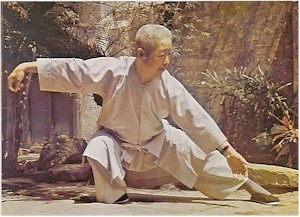
Zheng Manqing in snake creeps down.
Zheng Manqing performs snake creeps down

I have compiled a list of the names of the postures of Zheng Manqing’s 37-Posture Simplified Yang Style T’ai Chi form. The names are listed in Hanzi, in Pinyin (with tones), and in English. In order to preserve the formatting of the columns and the Chinese characters, I have provided a link to a PDF file.

This is a Level I handout my T’ai Chi class.

click HERE to download the PDF file

acupuncture

Does Acupuncture Hurt? What Can I Expect?

insert-needleI get this question from people often, especially from new patients on their first visit. I usually give my typical smiley smirk and say, “I’m going to be putting needles into your body. Of course it is going to hurt.” I realize that this is not funny in the classical sense, especially to the patient, but that small bit of absurdity in the midst of the new patient jitters often provides some levity. I follow up with, “Really, though, it’s not that bad.” I then go on to explain in more detail. It is a common enough question, so I thought I would share this information with you now.

There seems to be a popular misconception, especially in America, and perpetuated by mass media, that acupuncture is painless. Well, it is, but it isn’t. It all has to do with the definition of pain and, more specifically, with the Chinese definition of pain as it relates to acupuncture. Acupuncture is from China, after all, and the original phrase stating that acupuncture should not be painful is from China. In China, painful acupuncture would be having a continuous sharp or a continuous burning sensation that does not go away on its own after about one minute. If this happens, it should be brought to the attention of the acupuncturist so that the needle can be adjusted, and then the pain will go away. This does happen on rare occasion, and is just a normal part of the process. So, if it happens to you, do not be alarmed or discouraged, just let your practitioner know when it occurs.

That being said, acupuncture is definitely not sensationless. In fact, some of the normal sensations involved with acupuncture would be thought of as pain sensations by those in American culture. However, those sensations are actually referred to as qi reactions (deqi in Chinese) and are not considered pain by the Chinese definition.

What sensations are involved with acupuncture, then? I will explain, but keep in mind that this is all based on the acupuncture that I do which is based largely on the Chinese TCM model. There are other types of acupuncture with different needling methods, some of which involve no insertion at all.

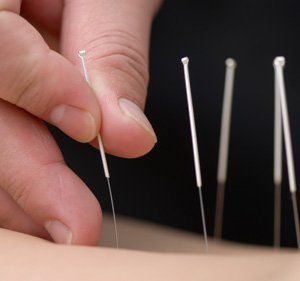
First, let’s talk about the needles. They are single-use, sterile, disposable, stainless steel needles. I tend to use 32 gauge needles for most applications. That means the needles are 0.25 mm thick, which is very thin. Acupuncture needles are different than the hypodermic needles which are used when we get shots or blood tests. Because they are so thin, around 5 to 10 acupuncture needles can fit inside the tip of a hypodermic needle, depending on the gauges used. Hypodermic needles are hollow and sharp; they cut through the skin and puncture structures (veins, arteries, nerves, etc.) beneath the skin. Acupuncture needles are solid and the tips are relatively dull; they push through the skin and, instead of puncturing structures, will nudge structures out of the way with careful needling. So, do not expect insertion of an acupuncture needle to feel like getting a shot or blood test.

Insertion of the needle is a 2 step process. First, the needle is quickly inserted shallowly so that it gets through the skin. This is done either free-hand, which I do, or with a guide tube, which is also common. It is this initial part of insertion that feels like a pinch. Some people do not even feel the pinch, but the pinch-like sensation usually happens. In sensitive and thin skinned areas, the pinch feeling tends to be more prevalent. In less sensitive and meatier areas of the body, the pinch is less noticeable.

After the initial part of the insertion, the needle then gets inserted deeper into the body to the depth and at the angle that is appropriate for its location and for its purpose. While this happens, a variety of sensations are possible. Some people even feel nothing at all, which I always find surprising because I am very sensitive and feel absolutely everything when being needled. Sometimes only the movement of the needle itself can be felt. However, a common sensation is an ache, pressure, or distended feeling around the needle, as if the needle is much thicker.

This ache is one of the more notable qi reactions. It can come on gradually and be mild, or it can come on suddenly and be very strong for an instant, fading gradually after that. In particular, when it is sudden and strong, Americans categorize it as pain. They typically do not like the sensation. In China, however, it would be typical for a patient to be disappointed if they did not feel that sensation. In fact, once elicited, a Chinese doctor might continue stimulating the needle to prolong and propagate that sensation to the point of having the patient yell at times. Again, the patients expect this as part of a good treatment. It is a different story here. Heavy needling like that would make the majority of American patients question whether or not they should come back for another treatment. Therefore, a much lighter type of needling tends to be done here, and even though I follow the Chinese model, my needling is lighter and more suitable for our culture.

In addition to the ache, there are other common sensations that may be felt. Coolness, warmth, itchiness, and tingly sensations are all possible, too. Also, any of the sensations may be: 1) local, just where the needle is; 2) referred, meaning the needle is one place, but it is felt someplace else; or, 3) radiating, meaning the sensation can travel in any direction away from the needle (most commonly in the direction of the acupuncture channel on which it is located).

Not everyone feels these types of sensations with every needle. Also, what a patient feels during one treatment may not be the same thing felt during the next treatment even if the needles are in the same points. Furthermore, even though these sensations are qi reactions and are an indicator that the acupuncture is doing what it is supposed to be doing, it is actually more important for the practitioner to feel the qi through the needle after insertion. It is because of this that the needle may be manipulated by twisting or pushing and pulling in order to call the qi to the needle and to deliver the proper treatment intent for that point. So, even if a patient feels nothing from a particular needle at a point, as long as I feel what I need to feel, I continue on to needle the next point.

After I feel the qi reaction, in many cases (particularly for functional complaints rather than musculoskeletal or structural complaints) there is no need to leave the needles in place in the patient. They can be removed at that point. However, I tend to leave the needles in, generally anywhere from 10 to 30 minutes depending on many factors. I do this because it is part of the Chinese TCM model, is what I learned in school, and is what is expected by patients getting acupuncture. There is a reason for this.

It is thought that the qi in the body cycles though the various acupuncture channels as connected from beginning to end in about 15 minutes, give or take depending on many factors. Therefore, if an acupuncture needle is positioned properly, but a qi reaction is not felt by the practitioner, the qi will still naturally arrive at the needle at some point during the treatment if the needle is retained.

Many practitioners, especially new ones, are not skilled at connecting the qi to the needle. It is not something that is easily taught. It is a sort of intangible skill that must be experienced in order to fully understand and to replicate. Therefore, needle retention can allow for a more effective treatment. Because of my long-time martial arts, t’ai chi, and qigong backgrounds before I studied acupuncture, I was already familiar with qi, how it felt, and how to manipulate it. This knowledge and experience easily flowed over into my acupuncture practice.

Usually, there is little or no sensation when removing a needle. The patient will often feel either nothing or just the movement of the needle. Sometimes there is discomfort, but it is more or less instantaneous. Also, I occasionally and intentionally elicit another qi reaction as I am removing a needle.

More often than not, there is no blood. In the few instances where there is blood, it is often not more than a small drop and is blotted clean with a cotton swab. Even rarer, a bruise and / or small swelling can occur. If there is a swelling, it can be immediately rubbed out to the point that it will not return, but the bruise will run the normal course of a bruise for you.

It is possible that with certain types of needling, particularly with deep and / or strong needling for structural complaints, the patient will experience some muscle aching for a day or two at the most, very similar to the type of muscle ache one would get from working out too much. This is normal, will go away, and does not take away from the effects of the treatment.

These are the notions that I like to get across to my patients before needling them so that they know what to expect. I try to be thorough, but I keep it basic. I think I have included everything here, but if you have any questions, please let me know.